Damga
A calm triple-tile puzzle in Ottoman ceramic and Old Turkic runes.
Live

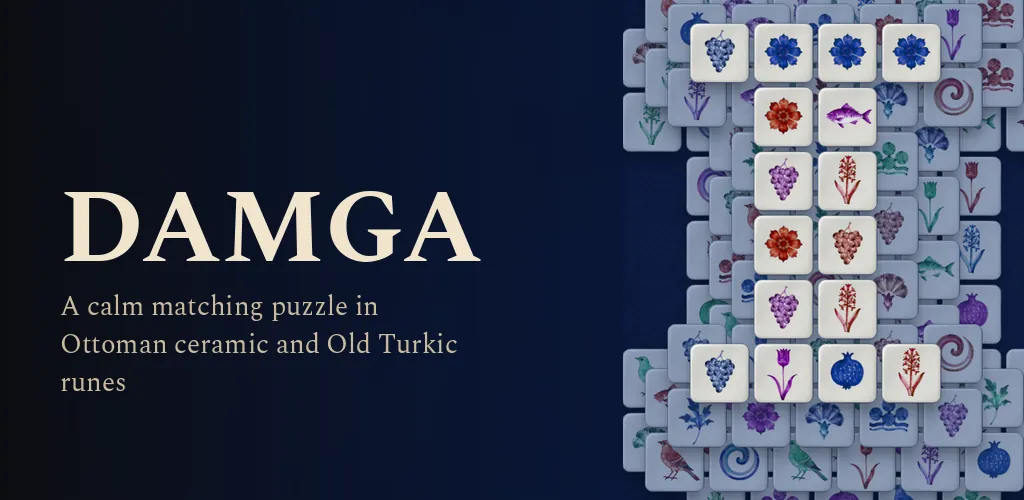
Find three of the same mark, take them, watch them go.
Maker's note
A game of the kind my wife likes: casual, calm, no clock, nothing that punishes you for losing. What I usually build is not what she would choose to play, and I wanted one that was.
The second reason is more technical. Everything I had published until then was ad-free, I had never run AdMob in a product of my own, and I wanted to see how it behaves. Damga is a measured place for that. No banner over the board, a rewarded video only when you ask for one, no interstitial at all for the first five levels and never after a loss. I set the limits first and fitted the advertising inside them, rather than the other way round.
The third reason became clear later. The Old Turkic marks come from the same world as Kopuznâme, and one of the game's two themes is exactly that: the real letters of the Göktürk inscriptions, set opposite the İznik ceramic. The two games draw on the same source.
What it does
The tray is the only pressure
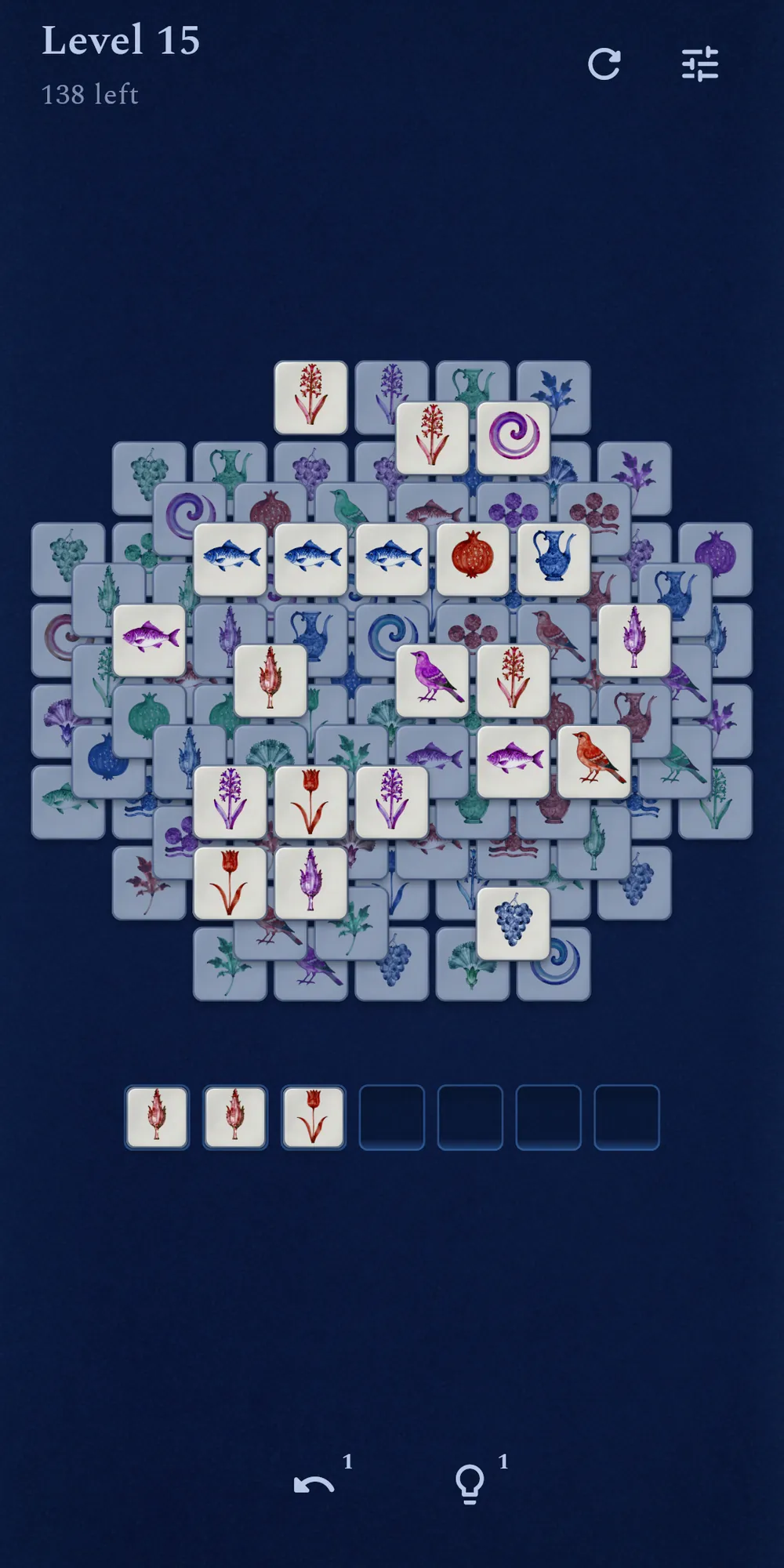
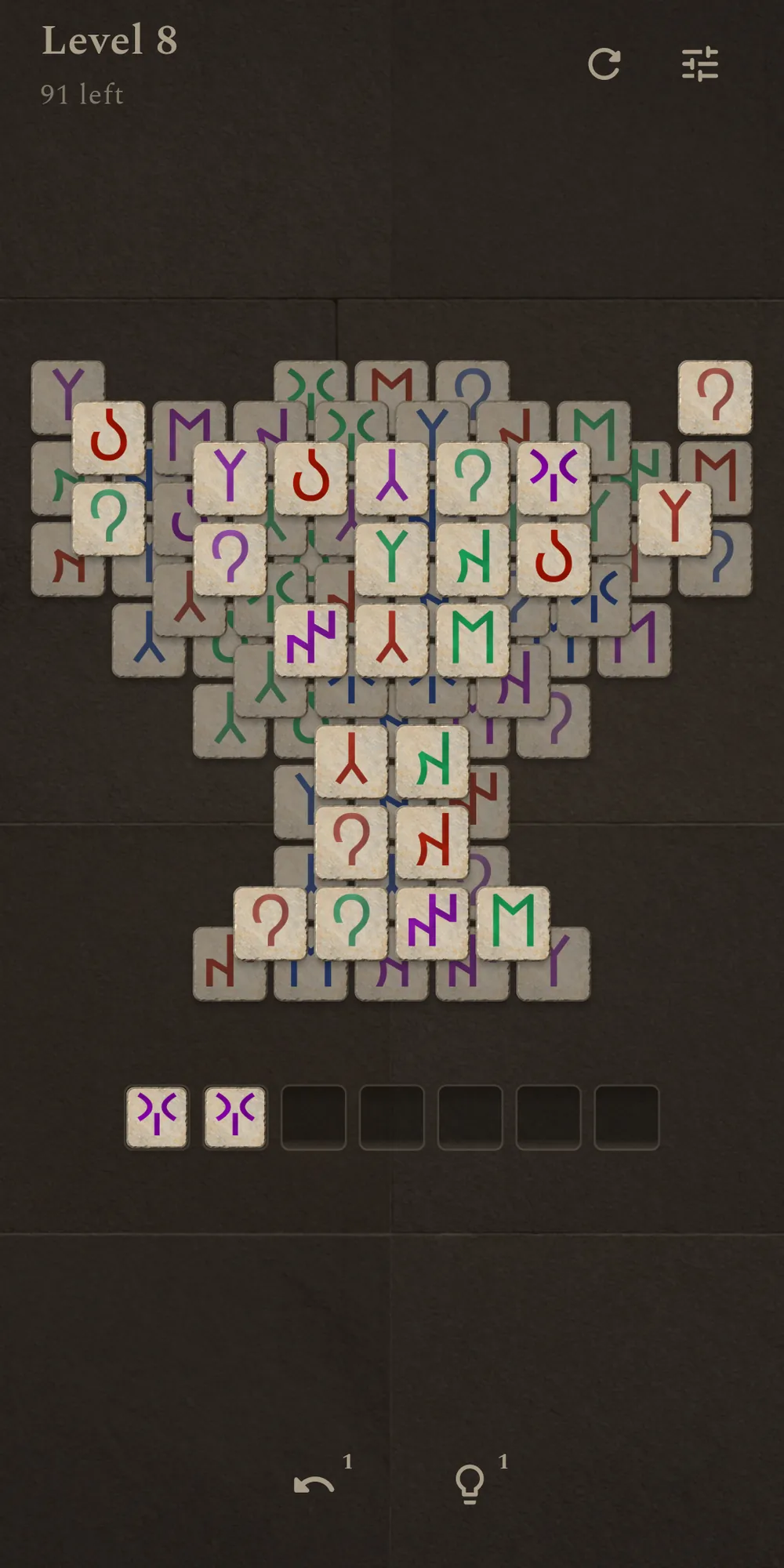
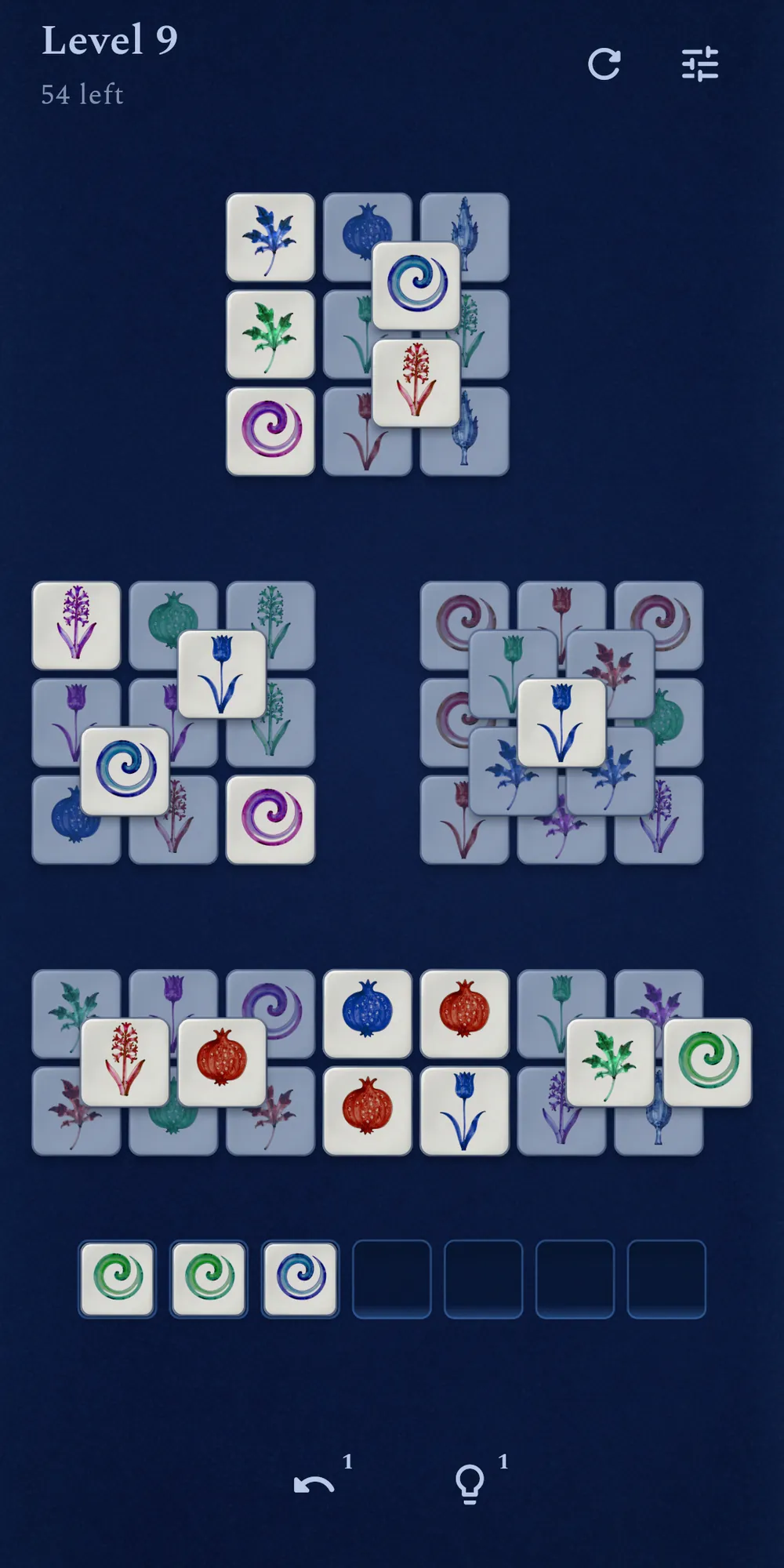
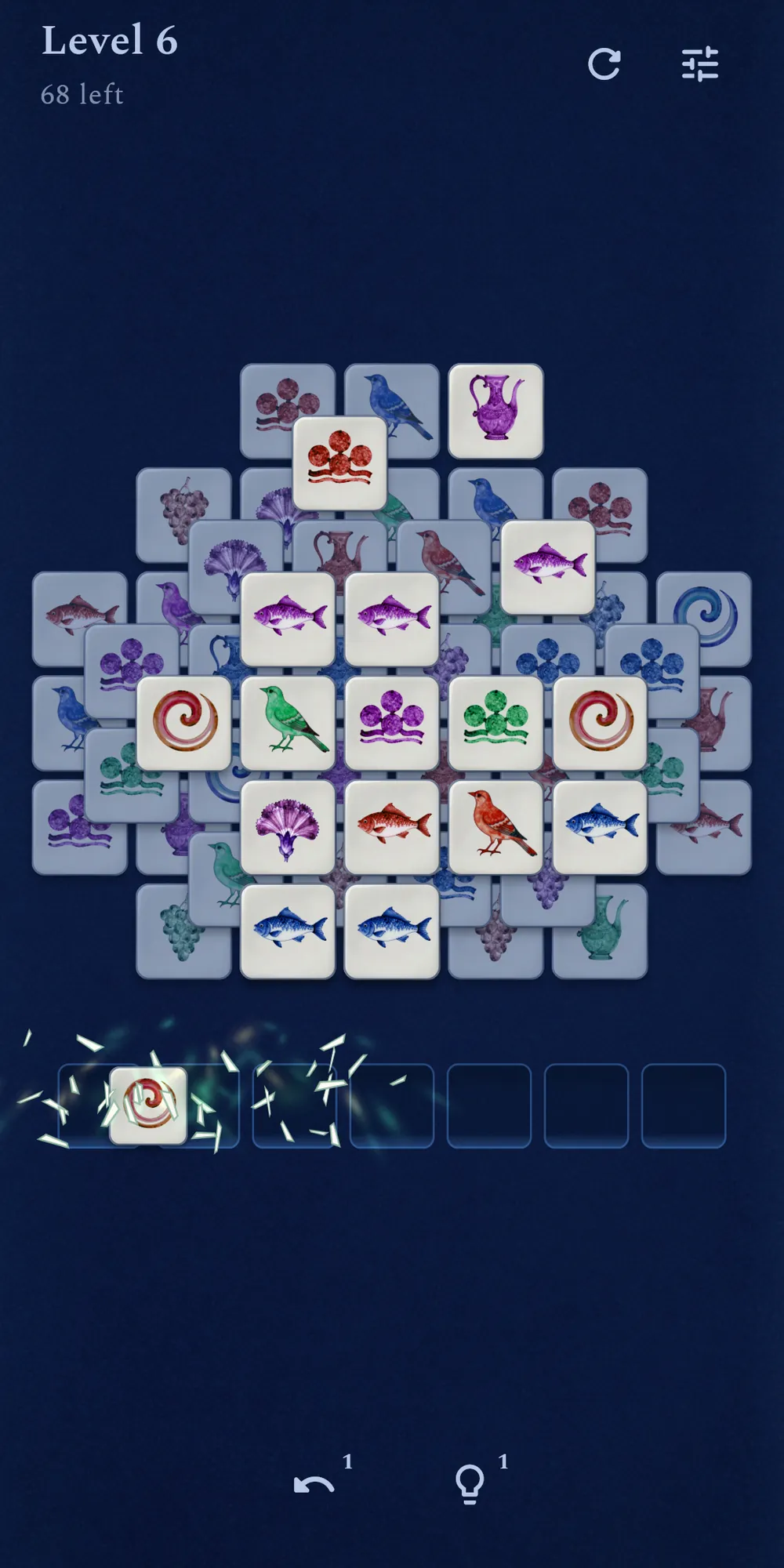
The tiles are stacked and only the ones with nothing on top can be lifted. A tile you touch goes to the seven-slot tray below, and when three of the same mark gather there they break and are gone. If the tray fills, you lose. No clock, no timer, no lives.
Two worlds, one game
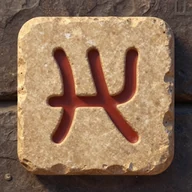
Orhun: the real letters of the Göktürk inscriptions, cut into sandstone and rubbed with earth pigment. The letters are not invented. They come from Unicode's Old Turkic block, and the twelve used here were chosen by measuring which are furthest apart in silhouette.
Çini: motifs from the sixteenth-century İznik workshops, painted on white glazed porcelain in cobalt, bole red, emerald and manganese purple. The two are not recolours of one another.
Boards that do not run out
Twelve board shapes were drawn by hand, each named after Ottoman architecture. The puzzle is generated fresh every time and every board is winnable by construction: the game builds it by playing it, so the line you have to find certainly exists.
Adverts, plainly
There is no banner and the board is never covered. A rewarded video appears only when you ask for one. An interstitial can appear only when you finish a level: none for the first five, then at most one every three levels, and never after a loss. A single purchase removes them for good.
Details
- Platform
- Android phone
- Boards
- 12 shapes, 27 to 144 tiles
- Languages
- 19, with right-to-left Arabic and Persian
- Internet
- Not required
- Price
- Free, one purchase removes adverts
- Sound
- Recordings of struck ceramic
- Version
- 0.3.2 · 11 Sep 2026
Get the app
A calm triple-tile puzzle in Ottoman ceramic and Old Turkic runes.
If you want to ask something about the app, alisarac@gmail.com