Good Old Sudoku
Classic sudoku. Four difficulties, a clock, three mistakes and three hints.
Live

The sudoku you already know. Nothing more, and nothing missing.
Maker's note
One of the apps I made for myself. Sudoku has been built a thousand times and I had no claim to a new kind of game; I wanted the version I would actually play.
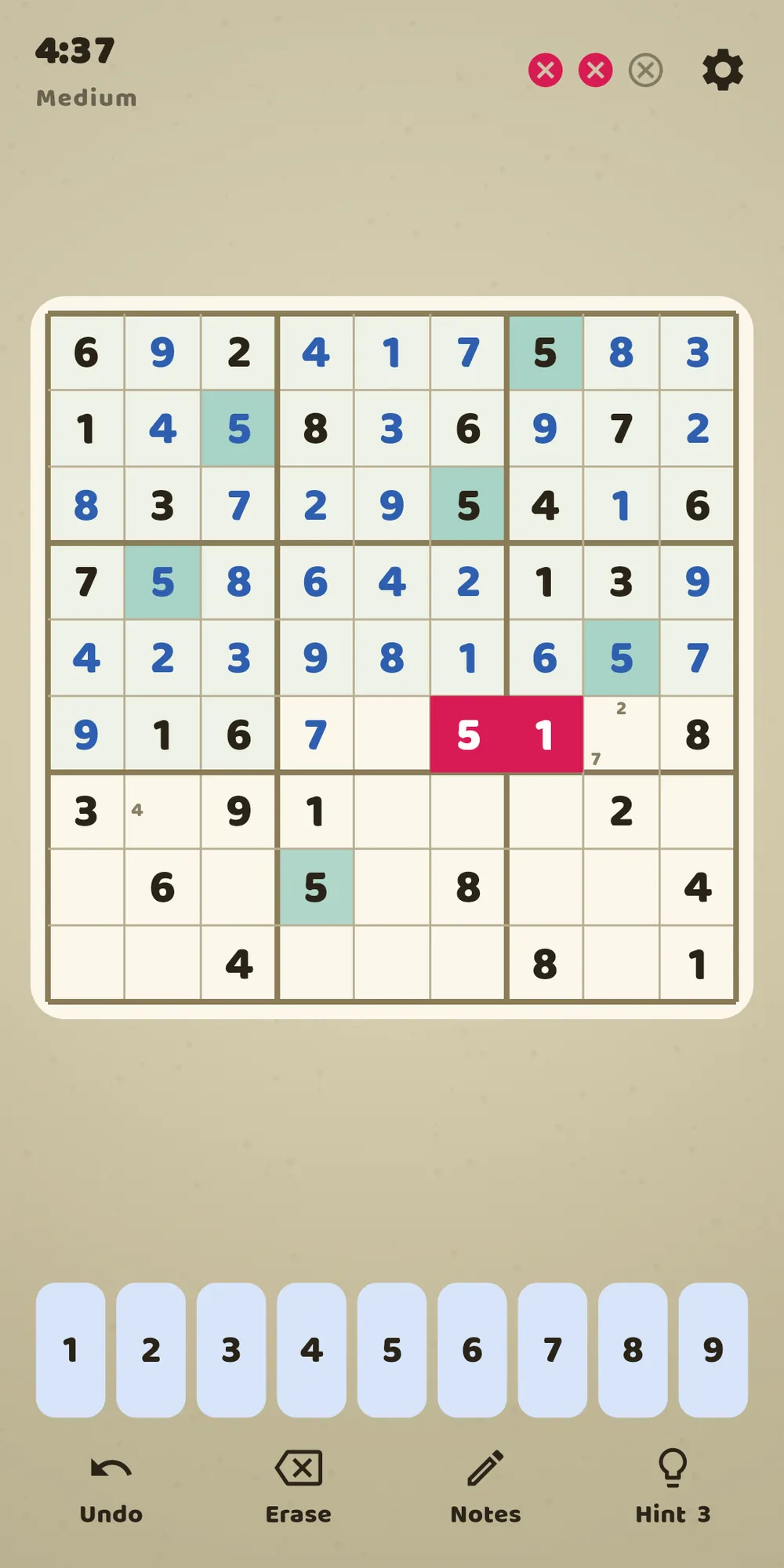
But a sudoku board is almost entirely typography: a grid, and digits written into it. There is no barer ground for an interface experiment — with nothing to decorate, every decision shows. The distance between a given clue and a number you wrote, between a wrong cell and the ground, between a pencil mark and the answer sitting beside it: none of it was eyeballed. It was measured, and a test holds each pair apart.
The rest came from the same place. Difficulty is graded by the technique a board demands rather than the number of blanks, because someone who picks Hard wants a harder board, not an emptier one. The clock stops behind a panel and when you put the phone down; in an app you built for yourself you do not forgive that kind of thing.
What it does
Difficulty is not counted in blanks
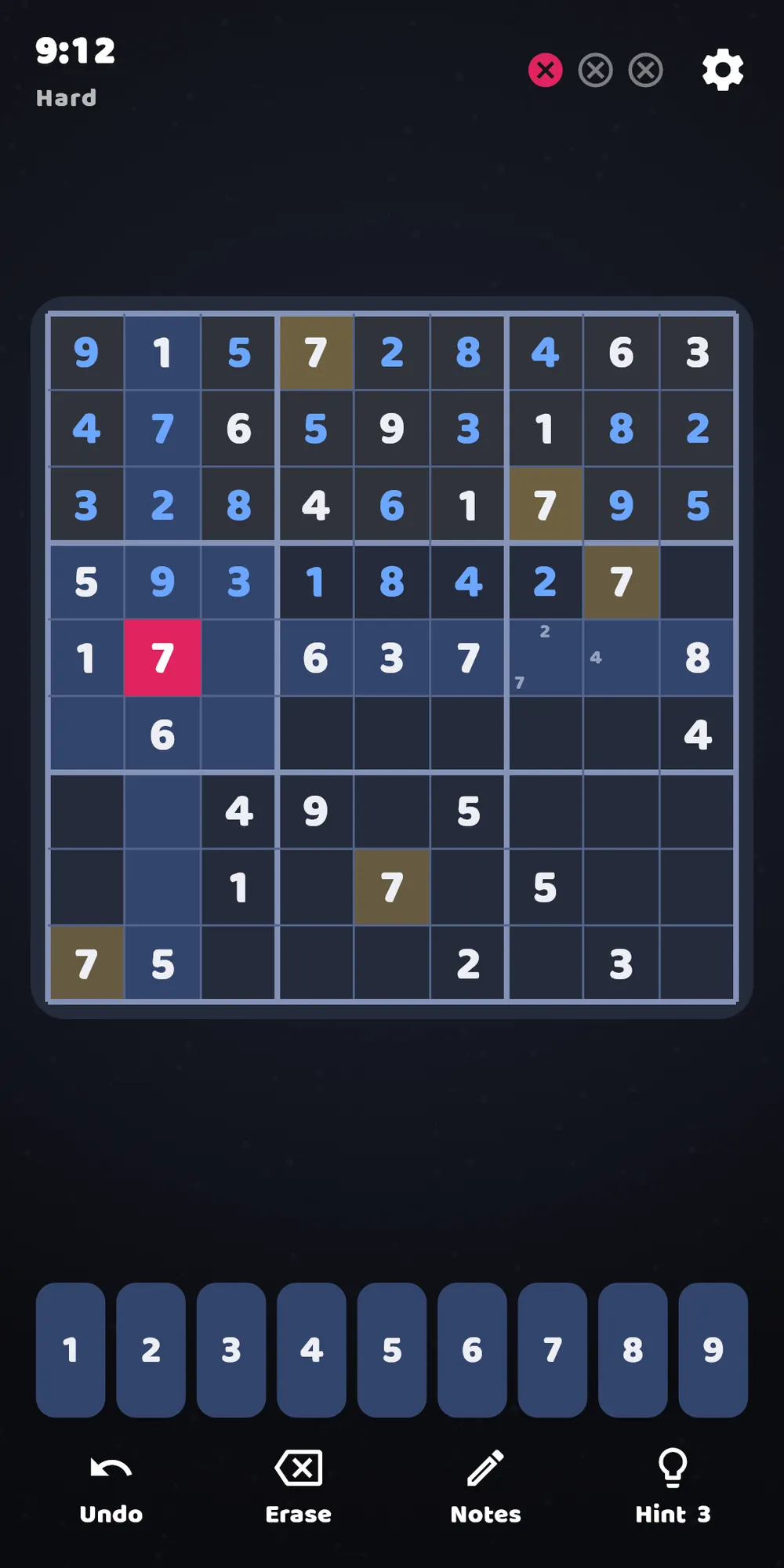
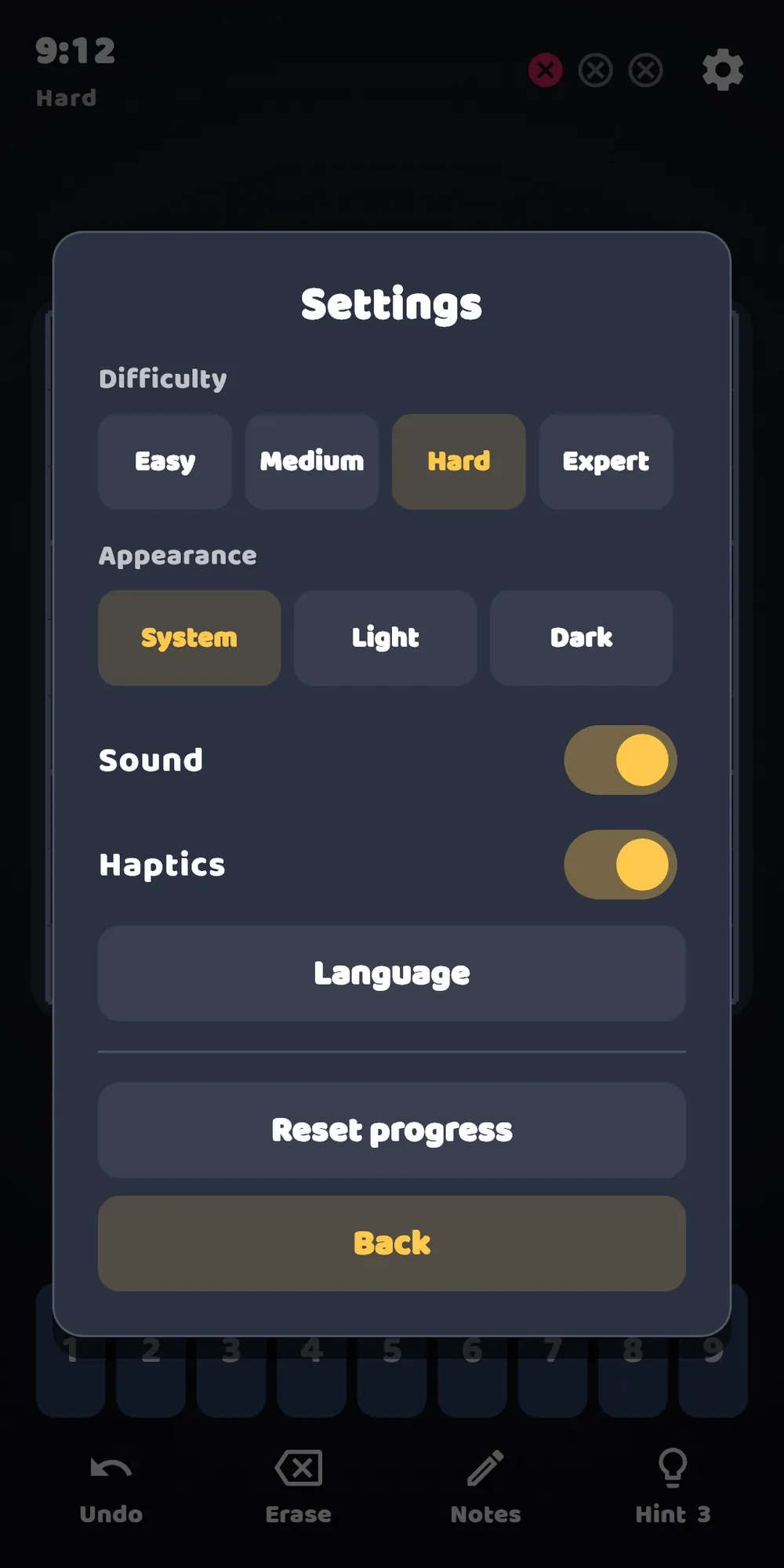
Four difficulties: Easy, Medium, Hard, Expert. Difficulty is graded by which technique a board demands, not by how many clues it hands you, so choosing Hard gets you a board that is genuinely hard rather than an easy one with more blanks.
Nothing to guess at
Every puzzle has exactly one solution, and that is verified while the board is being made. Every step can be reasoned out.
- Three mistakes; a wrong number is named wrong the moment you write it
- Three hints, and they open the most constrained cell rather than a random one
- Unlimited undo and erase
- Pencil marks, and placing a value clears it from its neighbours' marks for you
- Tap a number and every twin on the board lights up
Each difficulty keeps its own record
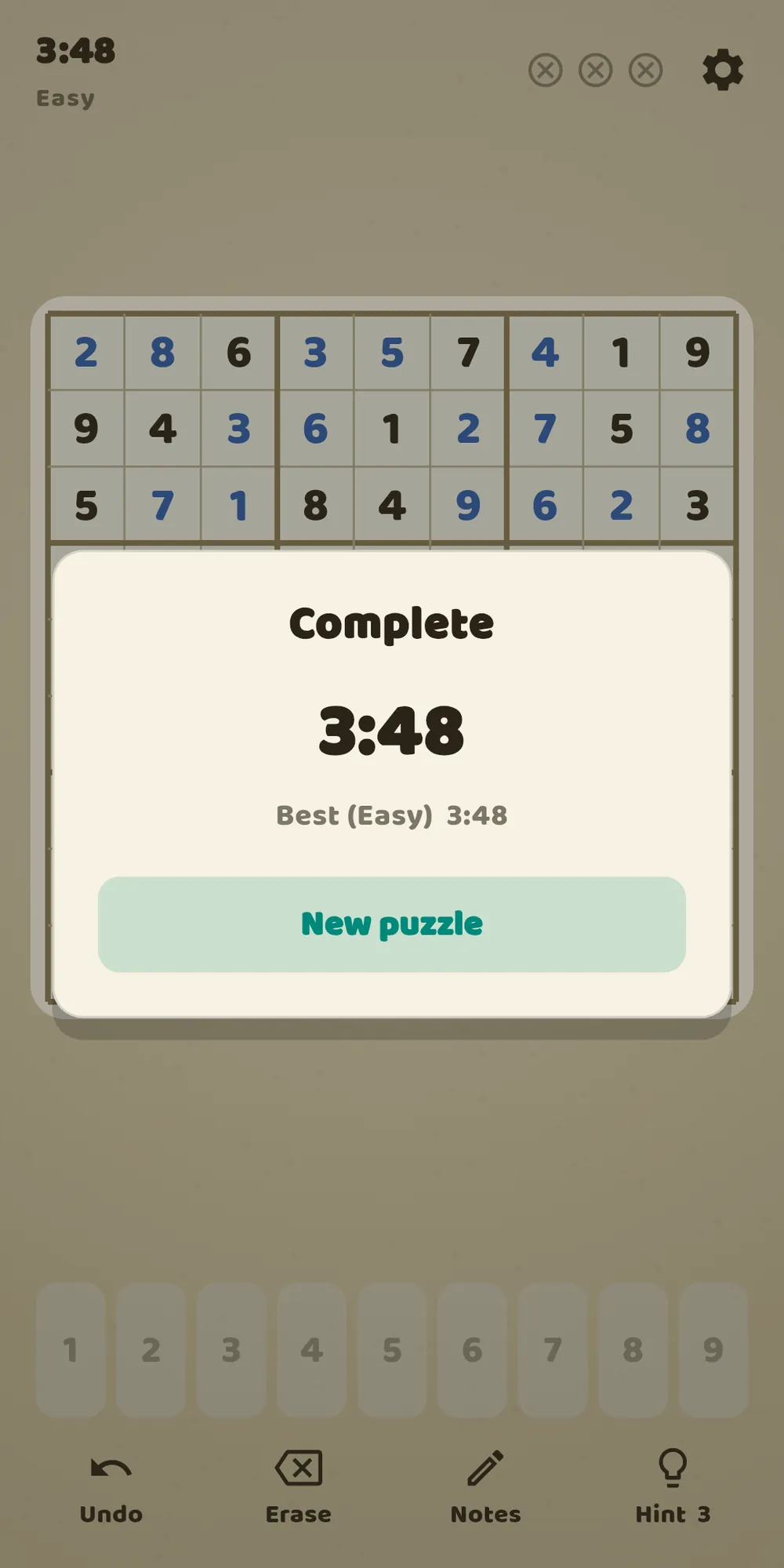
Somebody who finishes Easy in two minutes takes twenty over Expert; one shared record would be set on the first day and never approached again. So each difficulty keeps its own best time, and beating one tells you what it beat.
The clock stops behind a panel and when you put the phone down. No board is lost to a phone call.
Where you left off
Close the app, or let the phone drop it out of memory, and your board is still there: the numbers you wrote, your pencil marks, what you have left and the clock. It comes back put down, and the clock waits until you tap.
The colours were measured
Light and dark, or whatever the phone is set to. The given clues against your own answers, a wrong cell against the ground, a lit row against the cell rules: the distance between each pair was measured rather than eyeballed, and is held by a test.
Adverts, plainly
There is no banner over the board and the playing area is never covered. A rewarded video only appears if you ask for one: another hint when yours run out, or to save a board when the third mistake goes in. An interstitial can only appear when you finish a board, never during the first five, after that at most one board in three, and never when you lose. A one-time purchase removes them entirely.
Details
- Platform
- Android phone
- Difficulty
- 4 levels, graded by technique
- Solution
- One per board, verified as it is generated
- Languages
- 19, with right-to-left Arabic and Persian
- Internet
- Not required
- Price
- Free, one purchase removes adverts
- Version
- 1.0.4 · 11 Sep 2026
Get the app
Classic sudoku. Four difficulties, a clock, three mistakes and three hints.
If you want to ask something about the app, alisarac@gmail.com