Regulars
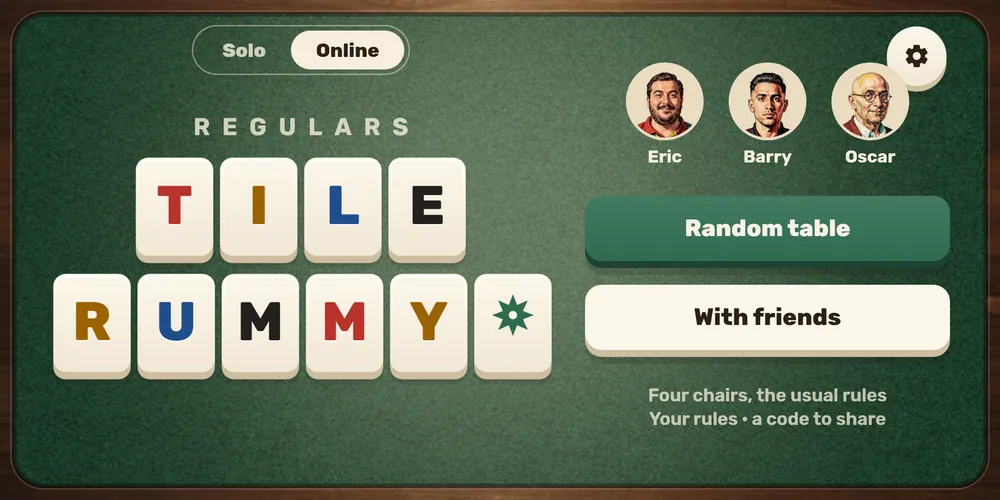
Tile rummy with friends or the regulars: rearrange the melds and go out.
Live

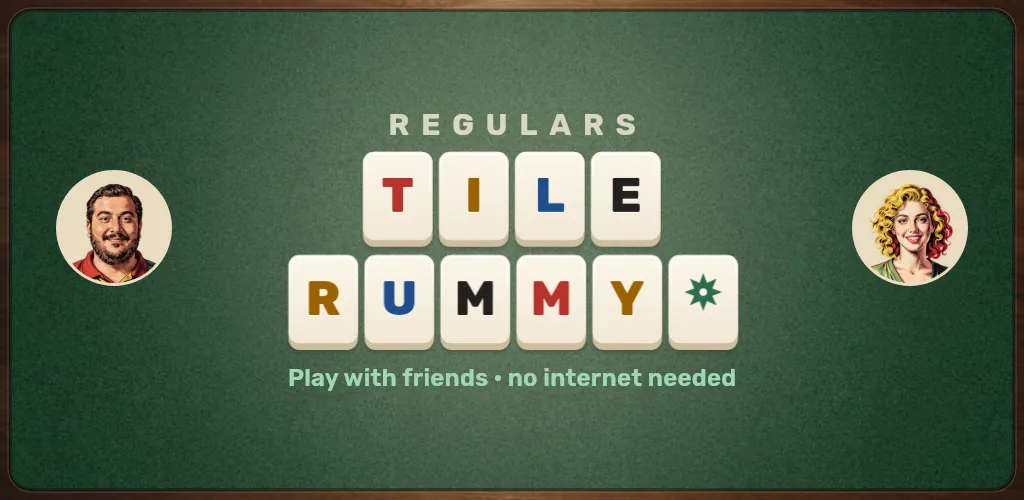
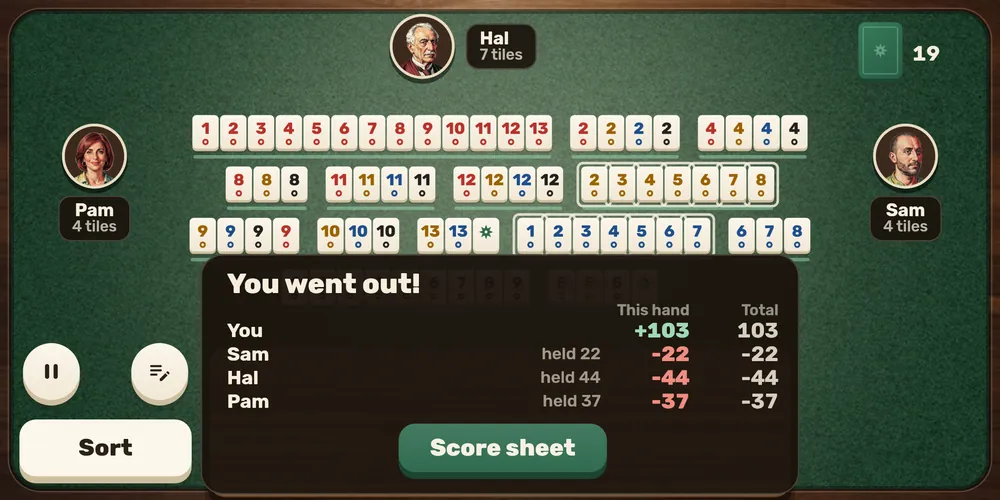
Green felt, a wooden rack, and three regulars who rearrange the table with you.
Maker's note
While building Müdavim Okey, what really interested me was not the game but the online layer underneath it: the table, the seats, the turn, a bot taking your chair when the connection drops, and finding your own hand again when you return. Once that layer had proved itself I wanted to put a second game on top of it. This is that game.
Okey is Turkey's table; the same pleasure is played all over the world as tile rummy. So the name says no "okey" — this is a different game with different rules, and Okey 101 stays a separate app.
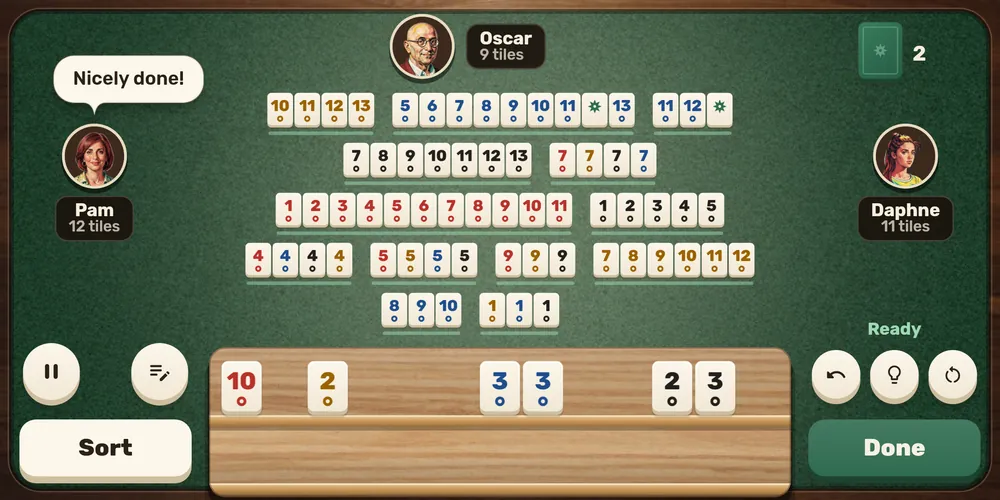
The hard part here is not the opponent, it is the table. Once you have opened, every meld on it becomes playable: split a run, join two, move a tile from a set into a run — and then prove the whole table is still valid when the turn ends. The hard regulars do the same thing: they rearrange the entire table to go out.
What it does
The table is everyone's
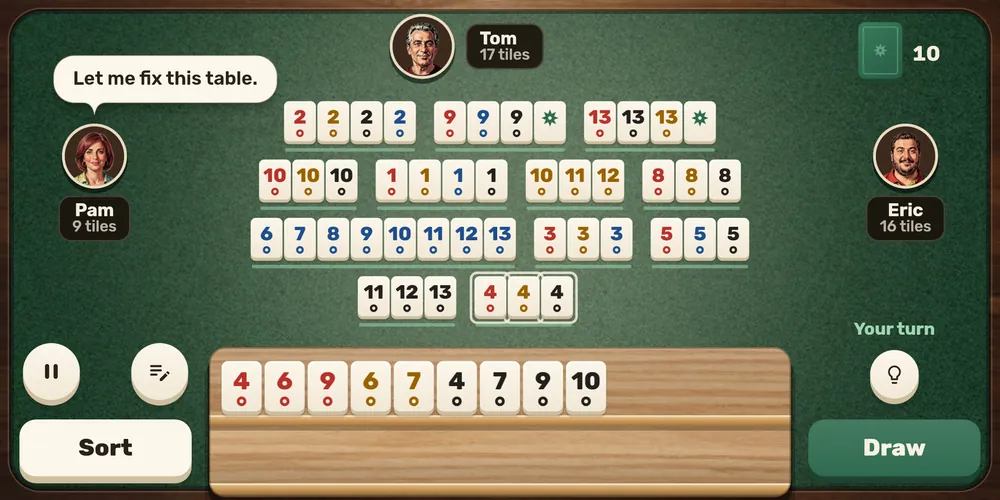
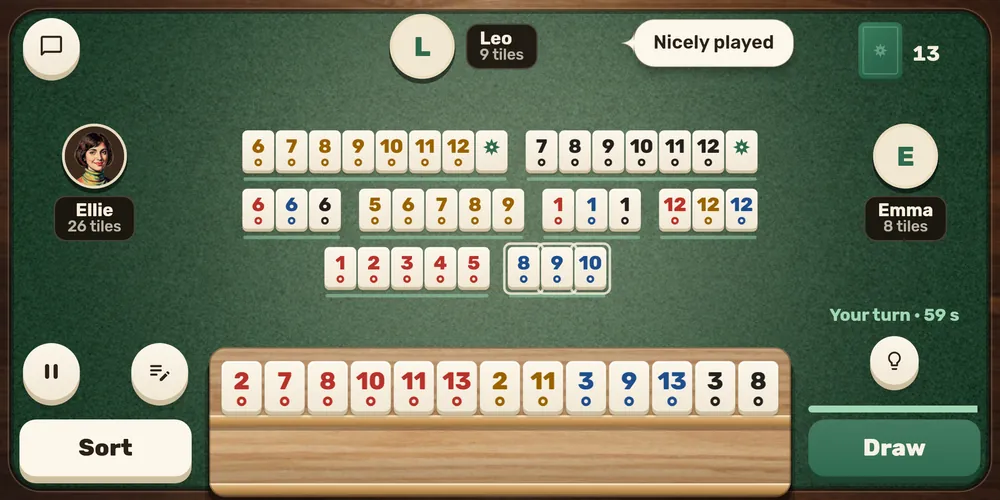
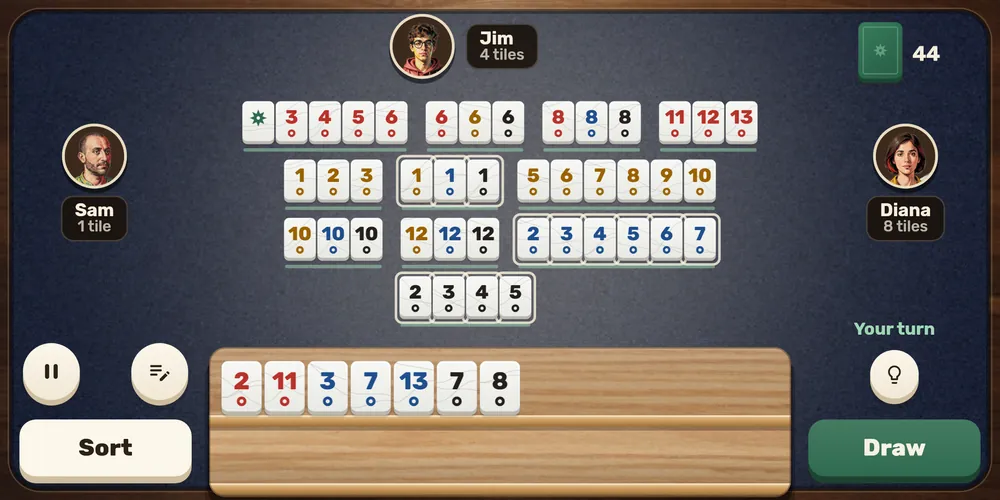
A run is one colour in order, a set is one number in different colours. Once you have opened, every meld on the table is yours to use: split a run, join two, move a tile from a set to a run — as long as every meld is valid when your turn ends. Drag tiles where you want them and room opens up; double-tap a tile on the table to split its meld there; undo one step, or put the whole turn back.
With your friends
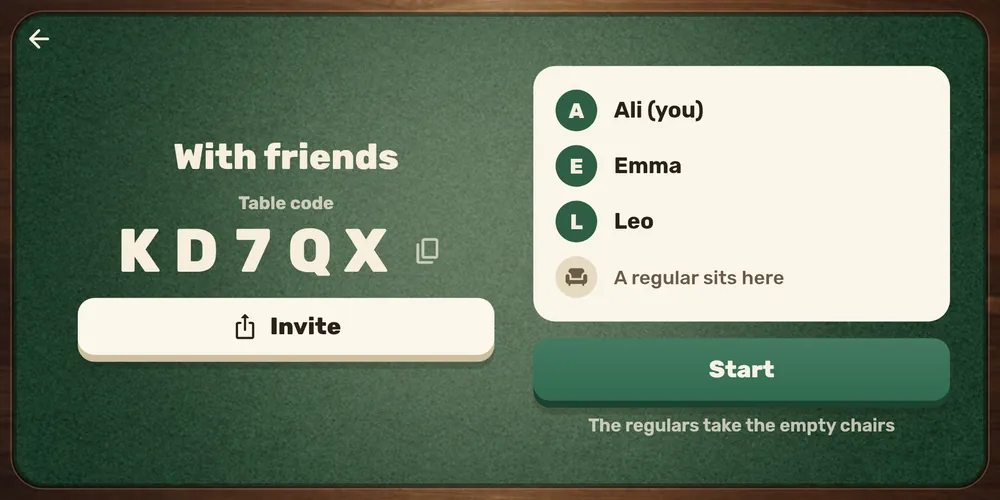
Open a table for two, three or four and send its five-letter code or an invitation link, or sit down at a random table of four. Your table plays your house rules and the regulars fill any empty chair. On the same Wi-Fi you do not even need the internet: one phone holds the table and nothing passes through the server. If someone's connection drops a regular covers for them until they come back to their own seat and their own rack.
Your table, your rules
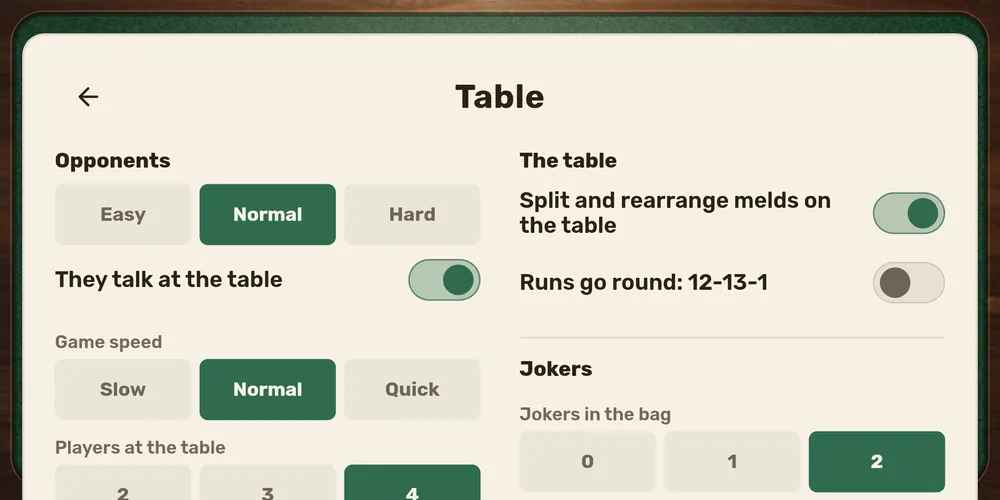
Tables play tile rummy their own way, so every rule is a setting: thirty, forty or fifty points to open, or none at all; opening with your own tiles only; splitting and rearranging or only adding; nought to two jokers, and taking a joker back by replacing it; what a joker left in hand costs; how the score is kept; what happens when the pool runs out; two to four players and one to eight hands a game.
The regulars
A cast of twenty-two faces, a new few at the table each game. Easy, normal or hard — the hard ones rearrange the whole table to go out. On your first game the regular on your left walks you through your first opening.
A table that helps
Every meld is underlined when it is valid and marked when it is not, with a word on what is wrong. Pick up a tile and the melds it fits light up. Stuck? The hint shows which of your tiles can go down, and a second tap lays out one way to do it. The tiles a player has just moved stay marked, so you can follow a rearranged table.
Honest money
Free — every rule, every opponent. An advert only between hands, never during play and never at an online table: no banners, no rewarded video. One purchase, the Regulars Card, removes the adverts and adds marble and porcelain tiles and navy and burgundy cloths. Nothing sold changes a hand.
Details
- Platform
- Android phone and tablet
- Players
- 2–4, 1–8 hands a game
- Online
- Server, same Wi-Fi, or none at all; a regular takes over on a drop
- Cast
- 22 regulars, three levels
- Internet
- Not required to play alone
- Price
- Free, one purchase removes adverts
Get the app
Tile rummy with friends or the regulars: rearrange the melds and go out.
If you want to ask something about the app, alisarac@gmail.com